 Aurora CO Plumbers Den
Reaching a plumber
How soon can a plumber arrive, and what changes that?
The dispatch line answers around the clock, but arrival depends on the job and the hour, so no time is promised on the phone. A burst pipe with water running gets priority over a slow drain. Weekday rush hours, snow on the roads and a long drive from your address push the arrival back.
You can speed things up by giving the street address, the cross street and what you can see before the call ends. Shutting off the water at the main, if you can reach it safely, also lets the plumber start with the repair instead of the cleanup.
Can a plumbing problem wait until morning?
It can wait if the water is off or contained and nothing is spreading. Picture a dripping faucet at 9 p.m.: close the shutoff under the sink, put a towel down and book a daytime visit. Call now if water is moving through a ceiling, sewage is rising in a tub or floor drain, a heater tank is leaking steadily, or you smell gas.
A gas smell is different from all the rest. Leave the house first and call 911 and the gas utility from outside; our dispatch line comes after that.
How do I find out whether my address is covered?
Call with the street address in hand. A ZIP code can cross city lines, so the dispatcher looks up the city, county and district behind the address itself. Aurora has seventeen ZIP codes from 80010 to 80047, and the network reaches beyond them to eight nearby areas plus Watkins.
The full list of areas and ZIP codes sits on the areas page. Call before assuming either way, since the address decides.
What should a tenant or a landlord do when a rental has a leak?
Tenants report the leak to the landlord or property manager at once and shut off the fixture valve if they can. The owner holds the water account in Aurora, which is why Aurora Water addresses landlords on billing, so the owner or manager normally authorizes the repair.
Landlords and property managers can call the dispatch line directly, give the unit number and say who will let the plumber in. Plumbers in our network take both single-unit calls and building-wide ones.
Working out what is wrong
Is it a leak, a clog or a pressure problem?
Look at where the symptom shows up. A slow drain in one fixture points to a clog in that branch. Several drains gurgling together point to the main line. Water that appears with no fixture running, or a meter that keeps moving with everything off, points to a leak. Weak flow at every tap, with the drains normal, points to pressure or a supply-side problem.
One example: a shower draining slowly while the kitchen sink runs fine is a branch clog, not a sewer problem. Describe the pattern to the dispatcher and the right kind of plumber is sent.
When is a camera inspection worth doing?
A camera is worth it when a drain keeps clogging after cleaning, when roots or a collapsed section are suspected, or before you buy a house with older sewer pipe. Aurora Water recommends that a plumber video-inspect the sewer line, and notes that water service lines cannot be videotaped, so the camera is a sewer tool only. Details are on its service line page.
Request a copy of the footage with the plumber’s notes; together they show the location and extent of the problem.
Who is responsible for which pipe: the homeowner, the utility or the HOA?
Start with this short checklist:
1. The homeowner owns the sewer line running from the house out to the city main, with the tap connection and any street or sidewalk repair, according to Aurora Water.
2. Aurora Water looks after the main itself and answers calls when that main is blocked.
3. Pipes inside a condo or townhome may belong to the association; its documents say where the owner’s part ends.
One caution: do not dig before a utility locate. The 811 locate covers public utilities, so a private sewer or water line needs a private locator.
Should I repair a pipe or fixture, or replace it?
Repair when the fault is one failed part on otherwise sound equipment: a worn valve, a cracked trap, a single pinhole. Replace when the same system has failed repeatedly, when parts are no longer available, or when the repair would cost a large share of a new unit.
In practice the age of the equipment and the condition of the pipes around it settle the question. Ask the plumber to price both routes in writing, so the comparison is on paper before work starts; the cost breakdown page lists what to ask.
Aurora weather, water and upkeep
What should I check before the first freeze?
Denver’s average first freeze falls in early October and its average last freeze in early May, per the National Weather Service, so September and the first days of October are the time to prepare. Disconnect and drain hoses, shut off and drain exterior hose bibs, have sprinkler lines blown out, and insulate pipes in unheated garages and crawlspaces.
Locate your main shutoff and test that it turns. Weather figures come from the NWS Denver and Boulder climate page.
How do I protect pipes during a cold snap?
Let a faucet on the exterior-wall side of the house drip, open cabinet doors under sinks on exterior walls and keep the heat on, even in a vacant room. Aurora’s adopted design table sets a 36-inch frost depth and a winter design temperature of 1 F, so exposed or shallow lines are the ones at risk. See the city code table.
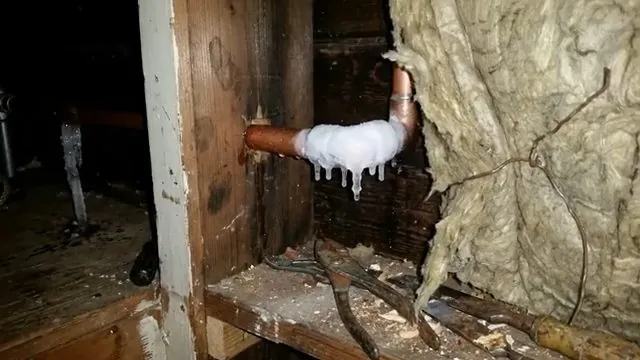
If a pipe freezes and has not split, warm the wall slowly and keep the faucet open. If water is already escaping, shut off the main and call.
What changes for leaks and access with a slab, crawlspace or basement?
A basement or crawlspace lets a plumber see and reach most lines, so many leaks are found and fixed without opening floors. With a slab foundation, supply lines can run through or under the concrete, so finding a leak needs detection equipment and the repair may mean a breakout or rerouting the line overhead.
No reliable source gives the share of Aurora homes on each foundation type, so this site does not state one. The Colorado Geological Survey notes expansive soil and rock along the Front Range, a reason foundations and pipes can move; ask the plumber what yours has.
Is a water softener or filter worth it in Aurora?
In the 2026 report on Aurora’s tap water, hardness averages 136 ppm (roughly 8 grains per gallon) and swings between 87 and 198 ppm day to day. That counts as moderate to hard water: scale builds up on fixtures and in heaters, but a softener is a comfort choice, not a requirement.
Choose a softener if scale spots, dry skin or a short heater life bother you. Choose a filter if taste or odor is the complaint, since a filter does not remove hardness. Flushing the water heater on a schedule is a lower-cost step to ask about first.
What does a maintenance visit usually include?
Plumbers in our network set their own checklists, so ask before booking. A typical visit covers checking shutoff valves and supply lines for corrosion, looking under sinks and around the heater for slow leaks, testing drains, and flushing the water heater tank to clear sediment.
Aurora Water also asks residents to keep fats, oils and grease out of drains; its sewer care page explains why. Nobody here sells a fixed maintenance plan, so the dispatcher books a plain visit.